
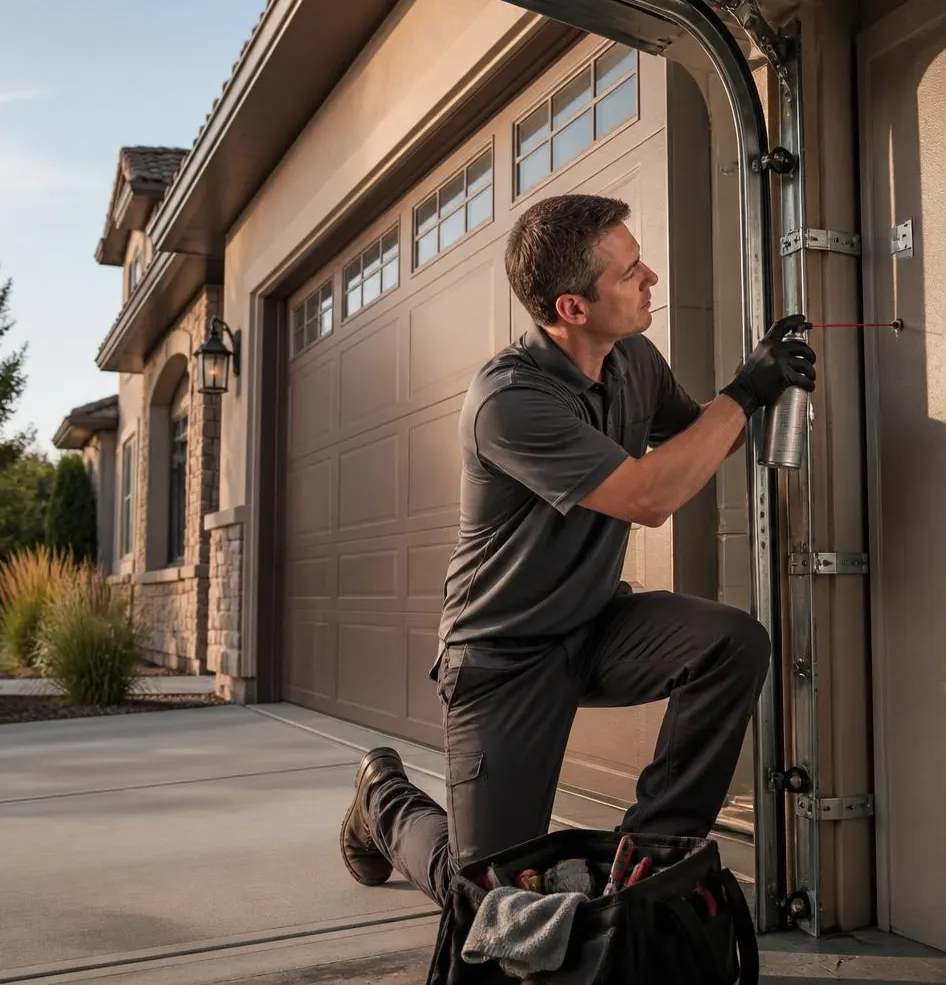
The Mistake Almost Every Buyer Makes
Most people check a garage door the same way: stand in the driveway, press the wall button, and watch it glide up and down. If it moves smoothly and doesn't shriek, it gets a mental checkmark. It's tempting because it's fast, it feels conclusive, and a general home inspector often does the exact same thing during a walkthrough that covers an entire house in a couple of hours. But a door can open and close perfectly on its last good day and still have a spring about to snap, a safety sensor that no longer works, or an opener with no auto-reverse protection at all. None of that shows up in a simple up-and-down test. It shows up when you try these checks instead.
The Checklist
1. Disconnect the opener and lift the door by hand
Pull the red release cord so the opener is no longer doing the work, then lift the door about halfway and let go. A properly balanced door should stay roughly where you left it. If it drops like a rock or shoots upward, the springs are worn, broken, or were never set correctly for that door's weight. A door fighting its springs puts extra strain on the opener motor and gears every single time it runs, which turns a spring problem into an opener problem if it's ignored long enough.
2. Test the auto-reverse safety feature
Lay a 2x4 flat on the floor in the door's path and close the door onto it. It should reverse immediately on contact. Then test the photo-eye sensors near the bottom of the tracks by waving a broom handle through the beam while the door is closing. If either test fails, this isn't a minor cosmetic issue, it's a safety system that's supposed to keep the door from closing on a child, a pet, or a car bumper. Doors made or installed before the mid-1990s may not have this feature built in at all, which is worth knowing if the home has an older original door.
3. Look closely at the springs
Torsion springs sit on a metal rod above the door; extension springs run along the upper tracks on either side. Check for visible rust, gaps between coils, or a spring that looks stretched compared to its neighbor. Visalia's dry, dusty stretches of the year accelerate wear on exposed hardware, and a spring that's been sitting under tension for years in that environment can fail without much warning. Inspectors frequently skip this because springs are mounted overhead and easy to glance past.
4. Check the tracks for bends, rust, and gaps
Run your eyes down both vertical tracks and the horizontal sections. Look for rust spots, especially near the bottom where winter rain can splash up and sit against metal, and check that the gap between rollers and track is consistent on both sides. A bent track usually means the door was forced closed at some point, or something hit it. Worn plastic rollers (as opposed to nylon or steel) are common, not a dealbreaker, but note it since they're a wear item that'll need replacing eventually.
5. Inspect the weatherstripping and bottom seal
Flex the rubber seal along the bottom of the door. If it's cracked, flattened, or pulling away from the panel, dust and wildfire smoke from our dry season will find their way in, along with the occasional rodent looking for shelter. This is a cheap fix on its own, but a seal in bad shape is also a clue about how well the rest of the door has been maintained.
6. Test the manual release and know where it is
Pull the emergency release cord and confirm it disconnects the door from the opener smoothly, then reconnect it by running the opener through a full cycle. If this mechanism is painted over, rusted stuck, or missing its handle, it won't work in a power outage or if the opener fails, which is exactly when you'd need it.
7. Check how the door panels have held up to sun and moisture
Wood and wood-composite doors can warp or delaminate after repeated cycles of hot inland summers followed by winter rain, especially on the side that gets the most afternoon sun. Look for bubbling paint, soft spots when you press on the bottom panel, or visible gaps where panels no longer meet flush. Steel doors can dent but generally handle this cycle better; just check for rust starting at the bottom edge.
8. Look at how the track is anchored to the structure
The vertical tracks should be lagged into wall studs or solid framing, not just sheetrock or thin trim. This matters more here than in a lot of places, since homes that have gone through earthquake retrofit work sometimes had garage walls opened up and reframed, and it's worth confirming the tracks were reattached properly afterward rather than just screwed back into whatever was convenient.
When to Call Visalia Garage Door
If the balance test fails, the auto-reverse doesn't work, or you spot spring damage, that's not a weekend DIY project, those systems hold enough tension to cause real injury if handled wrong. Visalia Garage Door can run a full inspection before closing, handle spring replacement safely with the right tension for your specific door, and set you up with a maintenance visit afterward so small issues like worn rollers or a failing seal get caught before they turn into a stuck door on a Saturday morning.
If you're buying a home in Visalia, Tulare, Exeter, Farmersville, Dinuba, Woodlake, Lindsay, or Porterville, give us a call before or right after closing and we'll walk the garage door with you in person.